
Starbucks Protein Coffee & Protein Latte: Every Flavor, Calorie Count & Nutrition Fact
Starbucks protein coffee is a line of espresso-based drinks made with Protein Boosted Milk — a proprietary blend of milk and whey protein isolate — instead of standard dairy. Each Grande serving delivers 28–30 grams of protein. The lineup includes the Iced Vanilla Protein Latte, Iced Caramel Protein Latte, Iced Vanilla Cream Protein Latte, and sugar-free versions of each. Calories range from 170 (sugar-free vanilla) to around 310 (iced caramel) for a Grande.
⚡ Quick Numbers
Starbucks protein lattes pack 28–30g of protein per Grande. The lightest option — Sugar-Free Vanilla Protein Latte — runs 170 calories. The richest — Iced Caramel Protein Latte — comes in at around 290–310 calories. All use espresso, Protein Boosted Milk, and protein cold foam in combination.
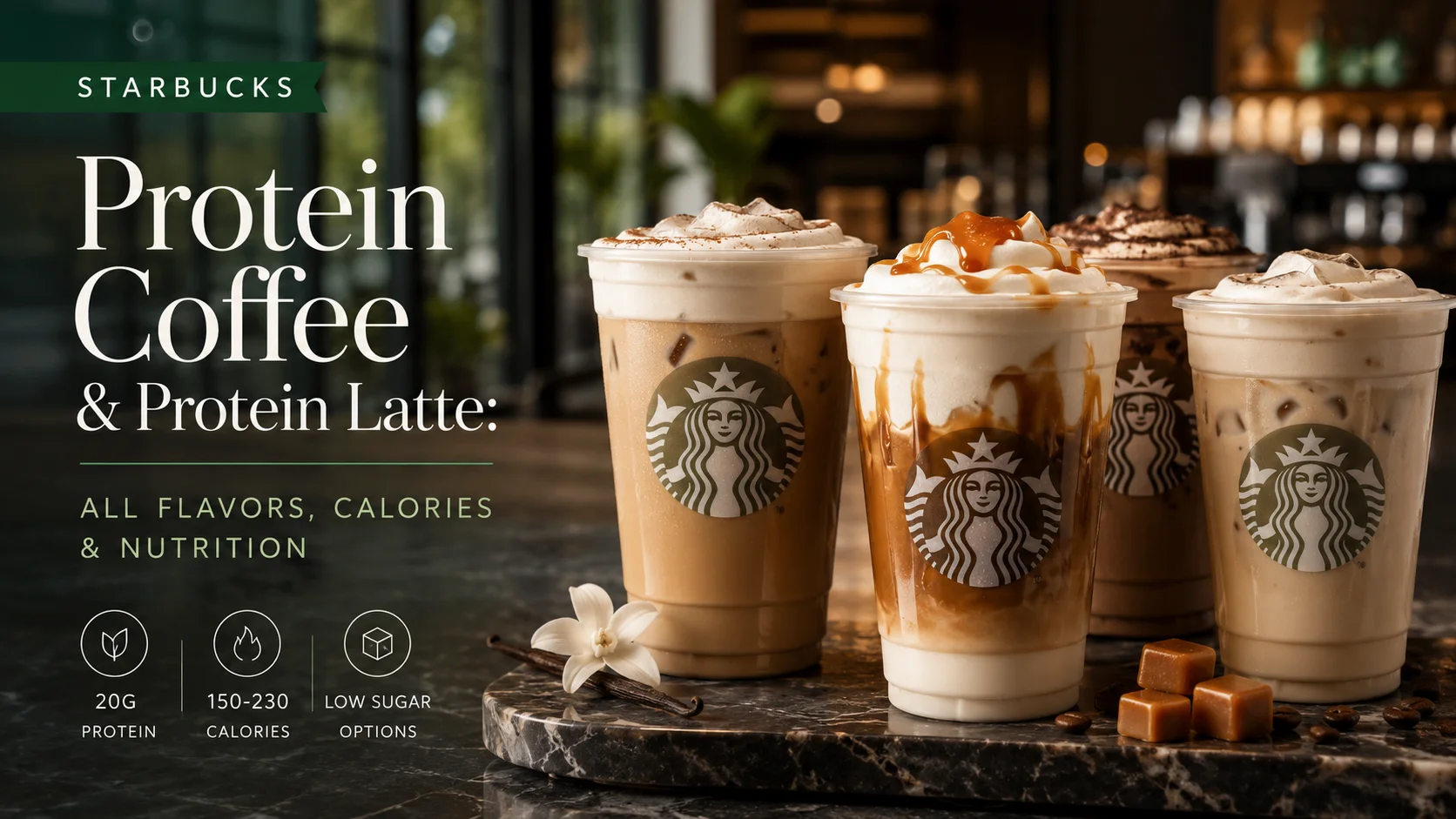
When Starbucks launched their protein coffee lineup, the reaction was split roughly in half. Half the internet immediately wanted to know the nutrition breakdown. The other half wanted to know if it actually tastes good. This guide covers both — and everything else in between.
What makes these drinks different from a regular latte isn’t a protein powder poured in at the end. The entire milk base has been swapped out for Starbucks’ Protein Boosted Milk, and most versions are topped with protein cold foam. The result is a drink that genuinely performs like a protein supplement while tasting like something off the coffee menu — not a gym shake with espresso poured in.
Below you’ll find the full calorie and nutrition breakdown for every flavor across every size, a comparison with regular lattes, an honest look at the macros, and everything you need to know before you order.
What Is Starbucks Protein Coffee, Exactly?
The confusion most people have is thinking these are just regular lattes with protein powder mixed in. They’re not. The protein comes from two sources working together:
- Protein Boosted Milk — Starbucks’ own milk blend with whey protein isolate. This replaces regular 2% or whole milk as the drink’s base entirely, meaning every sip of the latte contains protein, not just the foam on top.
- Protein Cold Foam — Added on top of most protein latte orders. This brings another ~20g of protein from the same protein milk base, frothed into cloud-like foam.
Combined, the two sources create a drink with 28–30 grams of complete protein — from whey protein isolate — in a Grande-sized order. The espresso is standard; it’s the milk and foam that do the nutritional heavy lifting.
Isolate is the purest form of whey protein — typically 90%+ protein by weight, with minimal fat and very little lactose. It’s the same protein source used in most premium sports supplements. Starbucks chose isolate over concentrate specifically because it mixes cleanly into milk without changing the texture or taste in a way that registers as “supplement-like.”
All Starbucks Protein Latte & Coffee Flavors
The lineup has grown since launch. Here’s every protein coffee drink currently on the Starbucks menu, along with what makes each one distinct:
Iced Vanilla Protein Latte
The flagship protein latte. Two shots of espresso over ice, with protein milk and vanilla protein cold foam on top. Clean vanilla flavor without being overly sweet. The one most people try first — and keep coming back to.
Iced Caramel Protein Latte
Espresso and protein milk with caramel syrup and salted caramel protein cold foam. Richer and sweeter than the vanilla version. The caramel adds more sugar but the protein count stays consistent.
Iced Vanilla Cream Protein Latte
Uses a slightly richer cream-based protein milk, giving it more body and a creamier mouthfeel than the standard vanilla version. Closer to a latte you’d get at a specialty coffee shop. Higher in fat because of the cream component.
Sugar-Free Vanilla Protein Latte
The lowest-calorie protein latte on the menu. Sugar-free vanilla syrup replaces the classic vanilla, dropping sugar from ~30g down to just 5g. Same protein, same espresso — dramatically fewer calories. The go-to for anyone watching their sugar intake carefully.
Sugar-Free Caramel Protein Latte
Sugar-free caramel syrup with protein milk and salted caramel protein cold foam. Delivers the caramel flavor profile without the full sugar load. A solid middle ground between the richness of iced caramel and the leanness of sugar-free vanilla.
Iced Sugar-Free Vanilla Cream Protein Latte
The cream-based protein milk with sugar-free vanilla syrup. Slightly richer than the standard sugar-free vanilla, with a bit more fat from the cream. Good if you want creaminess without the sugar.
Not every Starbucks location carries the full protein latte lineup. Some stores only stock select flavors or sizes. The Starbucks app shows real-time availability at your nearest location before you leave the house.
Starbucks Protein Latte Calories & Nutrition Facts — Full Table
Here is the complete nutrition breakdown for every protein latte flavor, based on a standard Grande (16 oz) serving. These figures are approximate and represent the drink as standard-ordered — espresso, protein milk base, flavored syrup, and protein cold foam included.
Protein Latte Nutrition Facts — Grande (16 oz)
| Flavor | Calories | Protein | Fat | Carbs | Sugar | Caffeine |
|---|---|---|---|---|---|---|
| Sugar-Free Vanilla Protein Latte | 170 cal | ~29g | 4.5g | 16g | 5g | ~150mg |
| SF Vanilla Cream Protein Latte | 180 cal | ~29g | 7g | 16g | 5g | ~150mg |
| Sugar-Free Caramel Protein Latte | 200 cal | ~29g | 5g | 22g | 8g | ~150mg |
| Iced Vanilla Protein Latte | 260 cal | ~29g | 5g | 36g | 30g | ~150mg |
| Iced Vanilla Cream Protein Latte | 290 cal | ~29g | 8g | 38g | 32g | ~150mg |
| Iced Caramel Protein Latte | 310 cal | ~29g | 5g | 48g | 42g | ~150mg |
Figures are approximate for Grande (16 oz) with standard syrup pumps and protein cold foam. Caffeine is based on 2 shots of espresso (~75mg per shot).
The protein column is where things get interesting: it holds almost perfectly steady at ~29g regardless of which flavor you pick. That’s because the protein comes from the milk base and cold foam — not from the syrup. The calorie and sugar swings between flavors are entirely driven by which syrup is added and how much of it the standard recipe calls for.
The sugar-free vanilla at 170 calories is genuinely impressive nutritionally. At roughly 5.9 calories per gram of protein, it competes with most protein supplements on efficiency — and you’re getting it in the form of a proper iced latte, not a shake.
Protein Latte Calories by Size: Tall, Grande & Venti
Starbucks adjusts the milk volume, espresso shots, and foam amount as you go up in size. Here’s how the numbers change using the Iced Vanilla Protein Latte as the reference:
Iced Vanilla Protein Latte — Calories & Protein by Size
| Size | Espresso | Calories | Protein | Sugar | Caffeine |
|---|---|---|---|---|---|
| Tall (12 oz) | 1 shot | ~190 cal | ~20g | ~22g | ~75mg |
| Grande (16 oz) | 2 shots | ~260 cal | ~29g | ~30g | ~150mg |
| Venti (24 oz) | 3 shots | ~380 cal | ~42g | ~44g | ~225mg |
Venti uses more protein milk and larger foam serving, which accounts for the protein jump to ~42g. All values are approximate.
The Venti is worth noting specifically for anyone using Starbucks as a post-workout meal replacement. At 42 grams of protein for ~380 calories, that’s a macro breakdown that competes seriously with dedicated meal replacement shakes — and it comes with 225mg of caffeine to go along with it.
The Tall, on the other hand, is useful if you want a genuine but lighter protein hit. Twenty grams of protein for ~190 calories with one shot of espresso is perfectly practical as a mid-morning snack-sized order.
What’s Actually in a Starbucks Protein Latte? The Ingredients
Breaking it down by component makes the nutrition story much easier to understand:
Espresso — The Coffee Foundation
Standard Starbucks espresso shots — 1 for Tall, 2 for Grande, 3 for Venti. This contributes essentially no calories (5 cal per shot) but delivers caffeine (~75mg per shot) and the coffee flavor. Nothing unusual here; same espresso used in any latte on the menu.
Protein Boosted Milk — The Protein Engine
This is what separates a protein latte from a regular latte. Starbucks’ Protein Boosted Milk is a blend of dairy milk and whey protein isolate — the same milk used in their protein cold foam. It’s this base that accounts for the majority of the drink’s protein content. The milk tastes very close to standard 2% milk; the protein is integrated rather than sitting on top like a visible powder.
Flavored Syrup — The Calorie Variable
Classic vanilla, caramel sauce, or their sugar-free counterparts. This is the single biggest variable between drink calories. Classic vanilla syrup adds roughly 20 calories per pump; sugar-free vanilla syrup adds approximately 0 calories per pump. A Grande typically uses 3–4 pumps, which explains the calorie gap between vanilla (260 cal) and sugar-free vanilla (170 cal).
Protein Cold Foam — The Topping That Doubles the Protein
Most protein latte orders come topped with protein cold foam made from the same protein milk base, adding another ~20g of protein and 90–130 calories depending on flavor. This is where the total protein number climbs above 28g — the latte body alone contributes roughly 8–10g; the foam adds the remaining ~20g.
The Protein Breakdown: Where Those 29 Grams Actually Come From
Understanding the split between the milk base and the foam matters — especially if you want to customize your order.
Protein Milk Base (latte body)
Protein Cold Foam (topping)
The foam is doing most of the protein work. This is important to know because it means if a barista runs out of protein cold foam or you skip it to reduce calories, your protein count drops significantly — from ~29g down to roughly 9g. Not bad, but a different product entirely from a nutritional standpoint.
It also means you can order the protein cold foam as a stand-alone add-on to any drink — including a regular iced latte or cold brew — and get the same ~20g protein hit from the foam alone. If you want more on that specifically, the complete cold foam guide covers how each cold foam type compares in full.
Sugar-Free vs. Regular Protein Lattes: Which Should You Order?
This is probably the most practically useful comparison in the whole guide. The sugar-free versions aren’t just slightly lighter — they’re meaningfully different drinks from a nutrition perspective.
Sugar-Free vs. Regular — Side-by-Side (Grande)
| Version | Calories | Sugar | Protein | Who It’s For |
|---|---|---|---|---|
| SF Vanilla Protein Latte | 170 cal | 5g | ~29g | Tracking macros, low-sugar diet, weight loss |
| SF Caramel Protein Latte | 200 cal | 8g | ~29g | Caramel flavor preference, moderate sugar |
| Iced Vanilla Protein Latte | 260 cal | 30g | ~29g | Full flavor experience, less sugar focus |
| Iced Vanilla Cream Protein Latte | 290 cal | 32g | ~29g | Richer texture, specialty-coffee feel |
| Iced Caramel Protein Latte | 310 cal | 42g | ~29g | Maximum flavor, treats as protein |
The protein number stays the same across every row. The 90-calorie and 37-gram-of-sugar gap between sugar-free vanilla and iced caramel is purely cosmetic from a protein standpoint — but it’s significant if you’re tracking daily sugar or total calories.
One thing worth flagging: the sugar-free versions use sucralose (Splenda) as the sweetener. If sucralose doesn’t sit well with you, stick to the classic vanilla version and simply ask for fewer pumps of syrup to bring the sugar count down. Two pumps instead of four cuts roughly 40 calories and 10 grams of sugar from a Grande.
Order the Iced Vanilla Protein Latte with 2 pumps of vanilla instead of 4, and ask for sugar-free vanilla protein cold foam. You’ll keep the full 29g protein while cutting roughly 50–60 calories and 15g of sugar from the standard order.
Starbucks Protein Latte vs. Regular Latte: What Actually Changes?
This is the comparison that surprises people the most. A regular iced vanilla latte with 2% milk at Grande is approximately 250 calories with 10–12 grams of protein. A protein latte at Grande is 260 calories with ~29 grams of protein. The calorie difference is almost nothing. The protein difference is enormous.
Protein Latte vs. Regular Iced Latte (Grande, Vanilla)
| Drink | Calories | Protein | Fat | Sugar |
|---|---|---|---|---|
| Regular Iced Vanilla Latte (2%) | 250 cal | 10g | 7g | 35g |
| Regular Iced Vanilla Latte (Oat Milk) | 290 cal | 6g | 8g | 42g |
| Iced Vanilla Protein Latte | 260 cal | 29g | 5g | 30g |
| SF Vanilla Protein Latte | 170 cal | 29g | 4.5g | 5g |
The oat milk latte comparison is particularly telling. Oat milk is popular partly because of its nutritional perception, but it’s actually lower in protein and higher in calories than the protein latte version. If you’re ordering oat milk for health reasons rather than dairy avoidance, a protein latte is almost certainly a better nutritional choice.
The fat reduction is also worth noting. Protein Boosted Milk is lower in fat than standard 2% because the protein isolate adds protein grams without adding fat. So you end up with more protein and less fat than a standard 2% latte — at nearly identical calories.
Starbucks Protein Coffee Macros: How It Fits Different Goals
Let’s be direct about how these drinks fit different real-world nutrition goals — because “high protein” means different things depending on what you’re trying to do.
For Muscle Building
The Grande Iced Vanilla Protein Latte (260 cal, 29g protein, 36g carbs, 5g fat) is a reasonable post-workout drink if you’ve already eaten a balanced meal. The protein quality is excellent — whey isolate is one of the fastest-absorbing proteins available, making it practical within the post-workout window. The carbs from the syrup are fine for glycogen replenishment. The only limit is that 29g may not be enough protein for a full recovery meal on its own for larger athletes.
For Weight Loss
The sugar-free vanilla version at 170 calories and 29g protein is genuinely useful here. High protein supports satiety, and 170 calories with 29g protein is a remarkably low-calorie way to stay full. Pair it with a high-fiber food and you have a complete low-calorie meal. Use the low-calorie Starbucks drinks guide to see how it slots in against other options if calories are your primary concern.
For General Fitness (Not Counting Macros)
Any version works. The iced caramel is richer and more indulgent; the vanilla is cleaner. Both give you the same protein. If you’re not tracking macros precisely but want to eat more protein as a general habit, a daily protein latte is a painless way to add 29g without changing your routine significantly.
For Low-Carb or Keto
The sugar-free options are workable — 16–22g of carbs for Grande — but the regular versions (36–48g carbs) are too high for strict keto. If you’re doing carb cycling or a moderate low-carb approach, sugar-free vanilla at 16g carbs fits most interpretations of “low-carb.” Use the Starbucks macro calculator to dial in exactly how any protein drink fits your daily carb target.
How to Order a Starbucks Protein Latte: What to Know First
A few things that make ordering smoother — especially if it’s your first time:
- The protein lattes appear in the Starbucks app under the Protein section or you can search “protein latte” directly. They’re listed as complete drinks, not customizations of existing lattes.
- If you want to reduce sugar, ask for fewer syrup pumps. Starbucks can do 1–4 pumps for any size; the default for Grande is typically 3–4.
- You can ask to skip the protein cold foam entirely if you want to cut roughly 90–130 calories and 20g protein from the top. This gives you a lower-calorie drink but reduces total protein to around 9–10g.
- You can also ask for a specific protein cold foam flavor on top — if you want a vanilla protein latte but banana protein cold foam on top, just say so. The foam flavors can be mixed and matched with the drink flavors.
- For the hottest protein coffee option (some locations offer a hot version), ask explicitly. Hot protein lattes use the same protein milk but without the cold foam, so protein is lower (~9–10g) than the iced version with foam.
Order a Venti Sugar-Free Vanilla Protein Latte with extra protein cold foam. You’ll push total protein to 45–50g for around 220 calories — a macro ratio that makes most dedicated protein shakes look ordinary by comparison.
Starbucks Protein Coffee Calories — Quick Reference Card
For anyone who just wants to scan numbers fast before ordering:
All Protein Lattes — Calorie Quick Reference (by Size)
| Flavor | Tall | Grande | Venti | Protein (Grande) |
|---|---|---|---|---|
| SF Vanilla Protein Latte | ~125 cal | ~170 cal | ~250 cal | ~29g |
| SF Vanilla Cream Protein Latte | ~135 cal | ~180 cal | ~265 cal | ~29g |
| SF Caramel Protein Latte | ~150 cal | ~200 cal | ~295 cal | ~29g |
| Iced Vanilla Protein Latte | ~190 cal | ~260 cal | ~380 cal | ~29g |
| Iced Vanilla Cream Protein Latte | ~215 cal | ~290 cal | ~420 cal | ~29g |
| Iced Caramel Protein Latte | ~230 cal | ~310 cal | ~450 cal | ~29g |
All figures are approximate. Protein stays consistent at ~29g for Grande regardless of flavor.
For a precise figure that accounts for your exact size, syrup pumps, and any modifications, drop your order into the Starbucks calorie calculator app — it handles the math for any combination.
Is Starbucks Protein Coffee Actually Worth Ordering?
The honest answer is yes — with one caveat.
The protein content is real. Whey protein isolate is a high-quality, complete protein source. The drinks taste like proper lattes rather than protein supplements. The calorie-to-protein ratio on the sugar-free versions is genuinely competitive with dedicated sports supplements. And the caffeine means you’re also getting your morning coffee alongside the protein hit. For anyone who drinks lattes regularly and wants to eat more protein without overhauling their routine, it’s an easy upgrade.
The caveat is the regular (non-sugar-free) versions and their sugar content. Forty-two grams of sugar in the Iced Caramel Protein Latte is significant. If you’re drinking one every day and the sugar is unaccounted for in your diet, it adds up quickly — roughly 300 grams of sugar per week from the drink alone. The drinks are genuinely high-protein, but that doesn’t make the sugar disappear.
The Bottom Line
Sugar-Free Vanilla Protein Latte is the clear standout: 29g of protein, 170 calories, 5g of sugar. It’s the version that makes the most nutritional sense as a daily habit. The iced caramel and vanilla cream versions are better treated as occasional indulgences — legitimately high in protein, but also legitimately high in sugar. Pick the one that fits your goals honestly, not the one that sounds most impressive. And if you want to compare any Starbucks protein drink against the rest of the calorie and nutrition landscape, the Starbucks calorie counter gives you the full picture in one place.
See Exact Macros for Your Protein Latte
Build your order — size, syrup pumps, foam, milk — and get the precise calorie and protein count before you order.
Open the Calorie Calculator ☕Frequently Asked Questions — Starbucks Protein Coffee & Lattes
Nutrition note: All calorie and macro figures in this guide are approximate. Starbucks nutrition can vary slightly by location and preparation. Always verify your specific order in the official Starbucks app or use the Starbucks calorie counter for a precise total before making dietary decisions based on these numbers.