
Starbucks Protein Matcha: Every Flavor, Calorie Count & Nutrition Breakdown
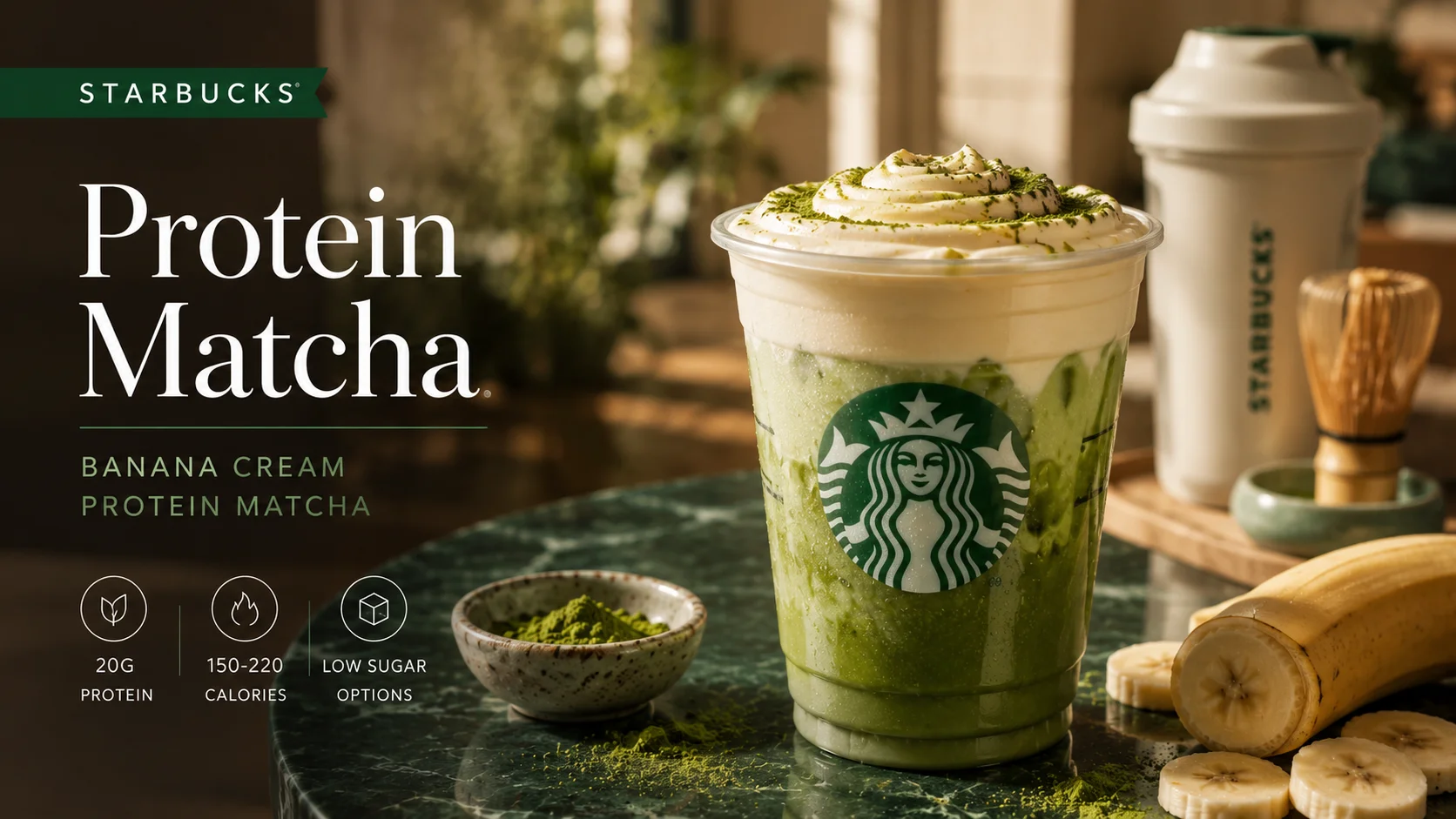
Starbucks protein matcha is a line of matcha-based drinks made with Protein Boosted Milk — a blend of dairy and whey protein isolate — topped with protein cold foam. Each Grande delivers approximately 20–25 grams of protein. Current flavors include Iced Banana Cream Protein Matcha, Iced Caramel Protein Matcha, Iced Sugar-Free Vanilla Protein Matcha, and Sugar-Free Caramel Protein Matcha. Calories range from roughly 175 (sugar-free vanilla) to 295 (banana cream) per Grande serving.
⚡ Quick Numbers
Starbucks protein matcha delivers ~20–25g of protein per Grande. The Iced Banana Cream Protein Matcha is the most popular — and the most calorie-dense at around 290 calories. The Sugar-Free Vanilla Protein Matcha is the lightest at roughly 175 calories. Caffeine is significantly lower than espresso-based protein drinks — approximately 30–40mg per serving from matcha versus ~150mg from a Grande latte.
Most people discover protein matcha by accident. They’re scrolling the Starbucks app looking for something lighter than a latte, stumble across the Iced Banana Cream Protein Matcha, and then spend the next five minutes trying to figure out whether it’s actually healthy or just cleverly marketed.
It’s a fair question. Matcha already has a health halo. Protein is trending. Putting them together sounds like a wellness win — but the nutrition story is more layered than the name suggests. This guide breaks down every protein matcha flavor at Starbucks: exact calories, full macros, how much protein you’re actually getting, how these drinks compare to both regular matcha and protein coffee, and which version makes the most sense depending on what you’re trying to accomplish.
What Is Starbucks Protein Matcha?
Starbucks protein matcha follows the same construction principle as the rest of their protein lineup: replace the milk base with Protein Boosted Milk (a proprietary blend of dairy and whey protein isolate) and top the drink with protein cold foam made from the same base. The matcha powder provides color, flavor, and a moderate caffeine hit — but it’s the milk base and foam doing the nutritional heavy lifting.
A regular Starbucks matcha latte uses 2% or oat milk as the base, giving you roughly 6–10 grams of protein depending on which milk you choose. Swap that base for protein milk, add protein cold foam on top, and you’re looking at 20–25 grams instead. Same matcha flavor, dramatically different nutrition profile.
Matcha contains both caffeine and L-theanine — an amino acid that promotes calm alertness without the jitteriness that can follow a shot of espresso. The result is a more even energy curve. If you find espresso-based drinks too sharp in the morning or you’re caffeine-sensitive, protein matcha delivers a gentler lift while still hitting a meaningful protein target.
All Starbucks Protein Matcha Flavors
Each flavor uses the same protein milk and matcha base — the difference is in the flavoring syrup or sauce and the protein cold foam on top. Here’s what’s currently available:
Iced Banana Cream Protein Matcha
The one that made people talk. Banana syrup blended into the protein milk base, topped with banana protein cold foam. The natural banana and earthy matcha work surprisingly well together. Highest calorie option in the lineup but also the most distinctly flavored. A genuine treat as a daily drink.
Iced Caramel Protein Matcha
Caramel syrup added to the protein matcha base, topped with salted caramel protein cold foam. The caramel sweetness softens the grassy edge of matcha, making it more approachable for people who don’t usually love matcha on its own. One of the higher-volume searches in this whole category.
Iced Sugar-Free Vanilla Protein Matcha
The standout option for anyone tracking calories or sugar closely. Sugar-free vanilla syrup with protein milk and sugar-free vanilla protein cold foam. The flavor is cleaner and less sweet than the other versions — the matcha comes through more clearly. Best nutritional profile in the lineup by a clear margin.
Sugar-Free Caramel Protein Matcha
The sugar-free caramel variant gives you caramel flavoring without the full sugar load of the standard caramel version. A reasonable middle ground — more flavor complexity than sugar-free vanilla, fewer calories and less sugar than the standard caramel.
The Iced Banana Cream Protein Matcha has been the most widely available flavor, but not every location carries all variants. Check the Starbucks app under the Protein section before heading in — availability is listed in real-time by store.
Starbucks Protein Matcha Calories & Nutrition Facts — Full Table
All figures below are based on a standard Grande (16 oz) serving, ordered as listed on the menu with standard syrup amounts and protein cold foam included. Matcha contributes approximately 30–40mg of caffeine regardless of flavor.
Protein Matcha Nutrition Facts — All Flavors, Grande (16 oz)
| Flavor | Calories | Protein | Fat | Carbs | Sugar | Caffeine |
|---|---|---|---|---|---|---|
| SF Vanilla Protein Matcha | 175 cal | ~23g | 4g | 20g | 7g | ~35mg |
| SF Caramel Protein Matcha | 195 cal | ~23g | 4.5g | 23g | 9g | ~35mg |
| Iced Caramel Protein Matcha | 265 cal | ~23g | 4.5g | 38g | 30g | ~35mg |
| Iced Banana Cream Protein Matcha | 290 cal | ~23g | 5g | 42g | 34g | ~35mg |
All values are approximate for Grande (16 oz) with standard protein cold foam included. Caffeine reflects matcha content only — no espresso is used in these drinks.
The pattern here mirrors the protein latte lineup: protein stays constant at ~23g regardless of flavor because it comes from the protein milk base and protein cold foam, not from the syrup. The calorie and sugar differences are driven purely by whether you choose a standard or sugar-free syrup, and which specific flavoring that is.
The sugar-free vanilla at 7g total sugar is particularly notable. That’s lower than most flavored protein bars and dramatically lower than any of the standard syrup versions.
Spotlight: Iced Banana Cream Protein Matcha
This is the drink that introduced most people to the protein matcha category — and it’s worth examining in detail because it sits in an interesting nutritional position. It’s the most calorie-dense option in the lineup, but it’s also the one people find most surprising in a good way taste-wise.
🍌 Iced Banana Cream Protein Matcha — Grande
Made with protein boosted milk, matcha powder, banana syrup, ice, and banana protein cold foam on top. The banana flavor bridges the gap between the earthy matcha base and the creamy foam in a way that caramel and vanilla don’t quite achieve.
The 34 grams of sugar is the most important number to register here. That’s a significant amount of added sugar for a drink that positions itself in the health-conscious category. If you’re drinking one as an occasional treat alongside a balanced diet, it’s fine. If you’re drinking one every day and counting on the “protein” label to make it a health food, the sugar content is worth taking seriously.
That said, 23 grams of protein for 290 calories is still a better calorie-to-protein ratio than most smoothies, protein bars, or flavored yogurt parfaits. The drink isn’t bad — it just requires honest accounting rather than assumption.
Protein Matcha Calories by Size
Using the Iced Banana Cream Protein Matcha as the reference (the most popular flavor), here’s how nutrition scales across sizes:
Iced Banana Cream Protein Matcha — All Sizes
| Size | Matcha Scoops | Calories | Protein | Sugar | Caffeine |
|---|---|---|---|---|---|
| Tall (12 oz) | 1 scoop | ~210 cal | ~15g | ~24g | ~25mg |
| Grande (16 oz) | 2 scoops | ~290 cal | ~23g | ~34g | ~35mg |
| Venti (24 oz) | 3 scoops | ~420 cal | ~34g | ~50g | ~55mg |
Venti uses more protein milk, more foam, and an additional matcha scoop. Caffeine scales with matcha scoops. Protein scales proportionally with milk volume and foam amount.
A Venti Sugar-Free Vanilla Protein Matcha delivers approximately 34 grams of protein for around 260 calories with minimal sugar (~10g). For anyone building daily protein targets around Starbucks orders, the Venti sugar-free version is the most efficient matcha option on the menu.
Protein Matcha vs. Regular Matcha Latte: What Changes?
Most people ordering a protein matcha are coming from a regular matcha latte habit. Here’s the complete picture of what you gain and what you lose in that switch — because it’s not all upside.
Protein Matcha vs. Regular Matcha — Grande Comparison
| Drink | Calories | Protein | Fat | Sugar | Caffeine |
|---|---|---|---|---|---|
| Matcha Green Tea Latte (2%) | ~240 cal | ~10g | ~6g | ~32g | ~80mg |
| Iced Matcha Latte (Oat Milk) | ~290 cal | ~5g | ~7g | ~38g | ~80mg |
| SF Vanilla Protein Matcha | ~175 cal | ~23g | 4g | 7g | ~35mg |
| Iced Caramel Protein Matcha | ~265 cal | ~23g | 4.5g | 30g | ~35mg |
| Iced Banana Cream Protein Matcha | ~290 cal | ~23g | 5g | 34g | ~35mg |
A few things stand out from this comparison that deserve honest acknowledgement.
First, the protein jump is substantial and real. Going from 5–10g to 23g is not a marginal upgrade. If you’re a regular matcha drinker and protein is any kind of goal, the switch pays off immediately.
Second, the caffeine drops significantly. A regular matcha latte is made with more matcha scoops; the protein versions use the same base but the protein milk replaces some of the milk volume, which can affect how intensely the matcha comes through. If you rely on your matcha for a meaningful caffeine boost, the protein version may feel lighter in that department. For those of us who find regular matcha a bit too strong, that’s actually a plus.
Third, the sugar-free vanilla protein matcha genuinely wins on almost every metric compared to a standard oat milk matcha latte. Fewer calories, far more protein, dramatically less sugar. If you’re currently ordering an oat milk matcha latte and you’re not dairy-free, the sugar-free protein matcha is an almost objectively better nutritional choice. See the full calorie picture for regular matcha options in the matcha green tea latte calories guide and the iced matcha latte breakdown.
Protein Matcha vs. Protein Latte: Which Should You Order?
Both use the same protein milk and protein cold foam, so the protein difference between them is relatively small. The real differences are in caffeine delivery, flavor profile, and how you want to feel after drinking them.
Protein Matcha
Calm, even energy
Earthy, sweet flavors
No espresso
Protein Latte
Sharper energy spike
Coffee flavors
2 espresso shots
Choose protein matcha if caffeine sensitivity is a factor, if you prefer not to drink espresso after mid-morning, or if you simply enjoy matcha’s flavor profile more than coffee’s. The protein difference (~6g less per Grande versus a latte) is real but not dramatic — both drinks are legitimate high-protein choices.
Choose the protein latte if you want more protein per serving, if you need a meaningful caffeine hit, or if the cost-per-gram-of-protein calculation matters to you. You can read the full protein latte comparison in the Starbucks cold foam guide for more context on how all the protein drink toppings compare.
The Caffeine Story: Matcha vs. Espresso
This is a key differentiator that doesn’t always get explained clearly. Starbucks protein matcha drinks contain no espresso — the caffeine comes entirely from matcha powder. That changes the experience considerably.
Protein Matcha (Grande)
Protein Latte (Grande)
The matcha caffeine number — roughly 35mg for a Grande — is close to what you’d get from a cup of green tea. It’s real but gentle. The L-theanine content in matcha is what makes this caffeine feel different from espresso: it promotes a state of focused calm rather than stimulated urgency. People who find that espresso makes them anxious or jittery often find matcha-based drinks much more comfortable as a daily habit.
If you’re ordering a protein drink specifically to fuel a workout, the protein latte’s 150mg caffeine will give you more pre-workout lift. If you want a protein-rich drink you can have in the late morning or afternoon without it affecting your sleep, protein matcha is the more practical choice.
Starbucks Protein Matcha Ingredients: What’s in It?
Like all drinks in the protein lineup, protein matcha has four core components:
- Matcha powder — Starbucks’ standard ceremonial-grade matcha blended into the drink. 1 scoop for Tall, 2 for Grande, 3 for Venti. This provides the green color, earthy flavor, caffeine, and L-theanine.
- Protein Boosted Milk — the same proprietary milk-and-whey-protein-isolate blend used in all Starbucks protein drinks. Replaces standard 2% or oat milk entirely as the drink’s liquid base.
- Flavored syrup — banana syrup, caramel sauce, vanilla syrup, or their sugar-free counterparts depending on the version you order. This is where most of the sugar in the drink comes from.
- Protein Cold Foam — blended protein milk frothed into cloud-like foam and layered on top, contributing the majority of the drink’s total protein content (~20g of the ~23g total).
Starbucks’ Protein Boosted Milk is a blend of dairy milk and whey protein isolate — the purest, most protein-dense form of whey. Isolate has 90%+ protein by weight, minimal fat, and very low lactose compared to whey concentrate. It integrates into the drink without changing the texture or creating the chalky mouthfeel associated with cheaper protein powders. The protein is genuinely functional rather than cosmetic.
Is Starbucks Protein Matcha Gluten-Free?
The core ingredients — matcha powder, protein boosted milk, standard flavoring syrups — do not contain gluten. Starbucks does not certify its locations as gluten-free due to shared equipment and potential cross-contamination. For general gluten avoidance, protein matcha should be fine. For celiac disease, Starbucks cannot guarantee safety.
Is Starbucks Protein Matcha Vegan or Dairy-Free?
No. The Protein Boosted Milk contains dairy, and whey protein isolate is a dairy derivative. There is currently no plant-based version of the protein matcha available at Starbucks. If you need a dairy-free matcha option, the standard lavender matcha or a regular iced matcha with oat milk would be the alternatives — though they won’t deliver the same protein count.
How to Order Starbucks Protein Matcha — Practical Tips
A few things that make the ordering process smoother and the drink better:
- Find it in the app under “Protein” — the protein matcha drinks are listed as their own category, not as customizations of the existing matcha latte. Search “protein matcha” in the app to pull them up directly.
- Fewer syrup pumps = significantly less sugar. The standard Grande uses 3–4 pumps of syrup. Ask for 2 pumps and you’ll shave roughly 30–40 calories and 10g of sugar without changing the protein count at all.
- Ask for no protein cold foam if you want to reduce calories — but know that this also reduces protein from ~23g down to roughly 5–7g. The foam is doing the protein work here, not just the decorative topping work.
- Request a specific foam flavor that doesn’t match the drink’s base. For example, banana cream protein matcha with sugar-free vanilla protein foam cuts the sugar substantially while keeping the banana in the drink itself.
- Order extra matcha scoops if you want more green tea flavor or a slightly higher caffeine dose. One extra scoop adds ~15–18mg caffeine and a more pronounced matcha taste without meaningfully changing the calorie count.
To see exactly how your modifications change the total calories and macros, use the Starbucks calorie calculator app — it handles custom builds including pump count, foam choice, and size so you get an accurate number rather than an estimate.
Is Starbucks Protein Matcha Worth Ordering?
For a specific type of person, genuinely yes. If you drink matcha regularly, want to increase your protein intake, and don’t drink coffee — or avoid it in the afternoons — protein matcha fills a real gap that the protein latte lineup doesn’t serve.
The sugar-free vanilla version in particular is one of the more nutritionally sensible drinks on the entire Starbucks protein menu. Roughly 175 calories, 23 grams of protein, 7 grams of sugar, and a legitimate matcha flavor. There aren’t many drinks at any coffee chain that can match that profile.
The banana cream version is more complicated. It’s genuinely delicious and the protein content is real — but 34 grams of sugar for a drink that positions as a health-forward choice is something to go in eyes open about. Treat it like what it is: a good-tasting drink that happens to be high in protein, not a guilt-free superfood experience.
The Verdict
Starbucks protein matcha is a legitimate product for anyone whose daily routine involves matcha and who wants to do something useful with that habit from a protein standpoint. The sugar-free vanilla is the clear winner nutritionally — 23g protein, 175 calories, minimal sugar — and works as a genuine daily drink without nutritional trade-offs worth worrying about. The banana cream version is enjoyable but treat it as an occasional splurge rather than an everyday order. Whatever version you choose, it’s worth comparing the full picture of your Starbucks order — including the matcha base, foam, and any other add-ons — using the Starbucks calorie counter to make sure the numbers actually line up with your goals.
Get the Exact Calories for Your Protein Matcha
Build your order — size, syrup pumps, foam flavor, extras — and see the precise nutrition breakdown before you order.
Open the Calorie Calculator 🍵Frequently Asked Questions — Starbucks Protein Matcha
Nutrition note: All calorie and macro figures in this guide are approximate based on standard Grande servings. Exact nutrition can vary by location and preparation. Verify your specific order in the Starbucks app or use the Starbucks calorie counter for a precise total before making dietary decisions.